Grape expectations
Digging in the dirt

Establishing a vineyard is more complex than it might first appear. It's not just about planting vines and waiting for them to throw out grapes. The foundation, quite literally, starts below the surface. So for us that meant soil testing, ensuring proper drainage, and studying sun exposure before we spent any money on plants and posts. Luckily our intended test site was a south facing slope so we knew our vines would be able to pick up a tan quite quickly. That was one box ticked.
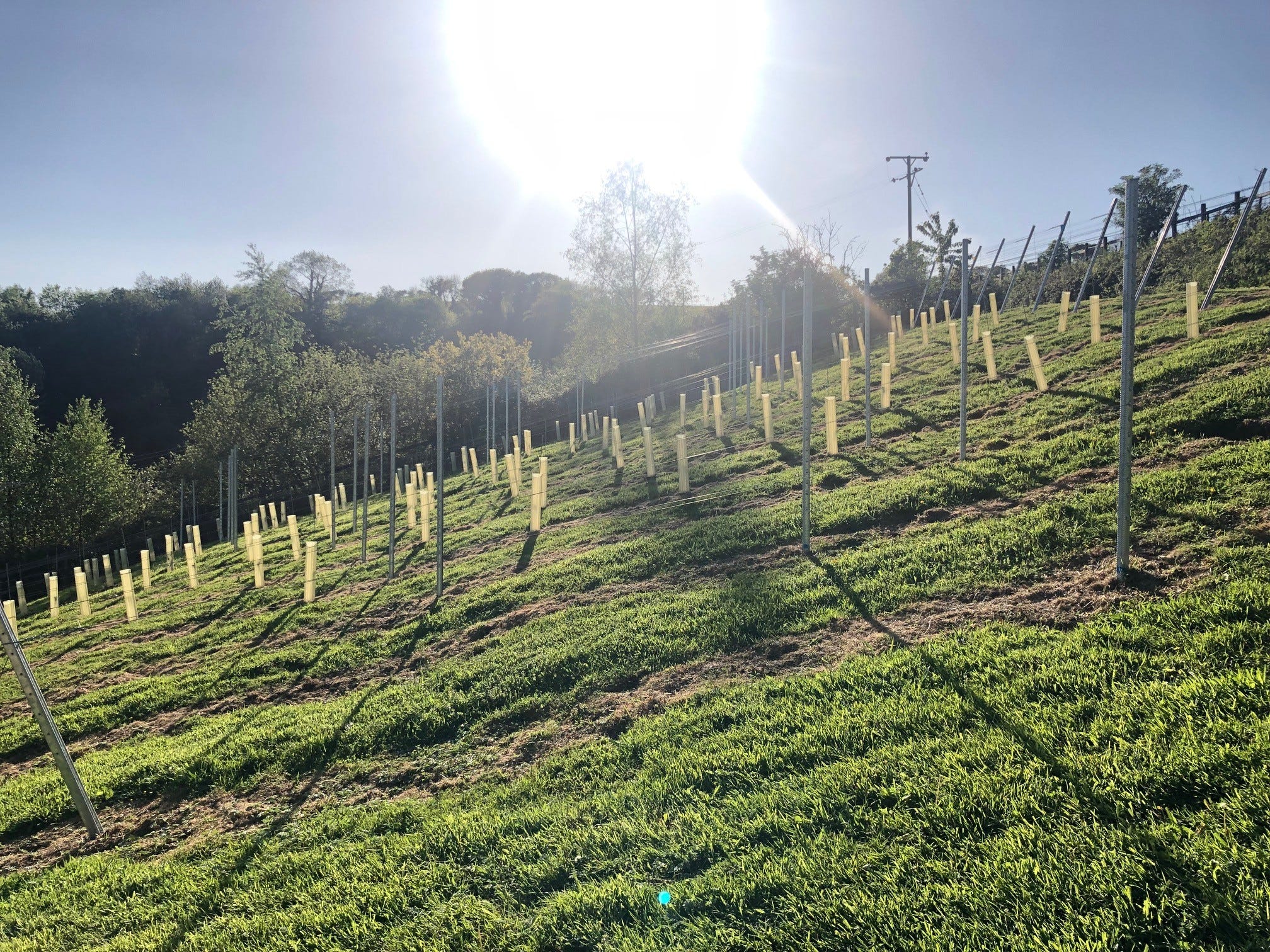
A quick pH test on the soil showed that it was faintly acidic and there was enough earth to dig a metre deep test hole. I’m sure we could have gone further and employed a vineyard consultant who would have picked up some issues but as I had recently found a grape vine growing up through the concrete in our yard I figured nature would find a way. We were good to go.
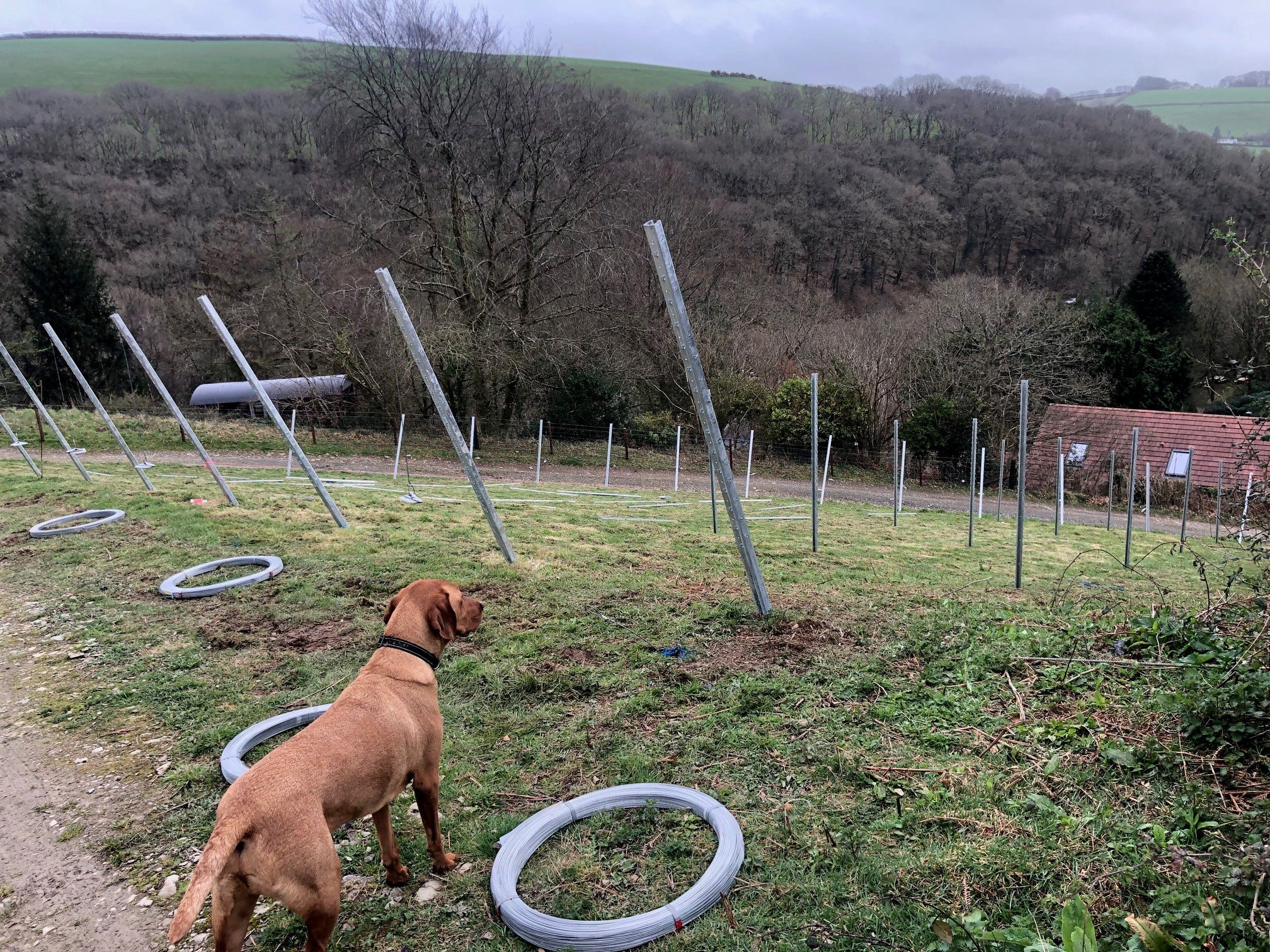
Recognising my aversion to hammering one post into the ground, let alone 60 of them, we enlisted the expertise of a contractor to help with installing the posts and wires. After a few conversations around spacing (2 meters between rows and 1.5 meters between each vine in the row) and style of training to be used, we totted up the kit needed and placed the order. I had often admired the symmetry of vineyards; the regimented rows set amongst rural backdrops just looks nice. What I hadn’t known about, but soon learnt, was that there are many ways to train a vine to grow and, even at the planting stage, it helps to decide on the method to be used as this instructs the layout of wires. We decided on the “double Guyot” system which allows the grapes to produce fruits along the lowest wire (the fruiting wire) and the covering canopy of leaves to grow along the top wire (the canopy wire).
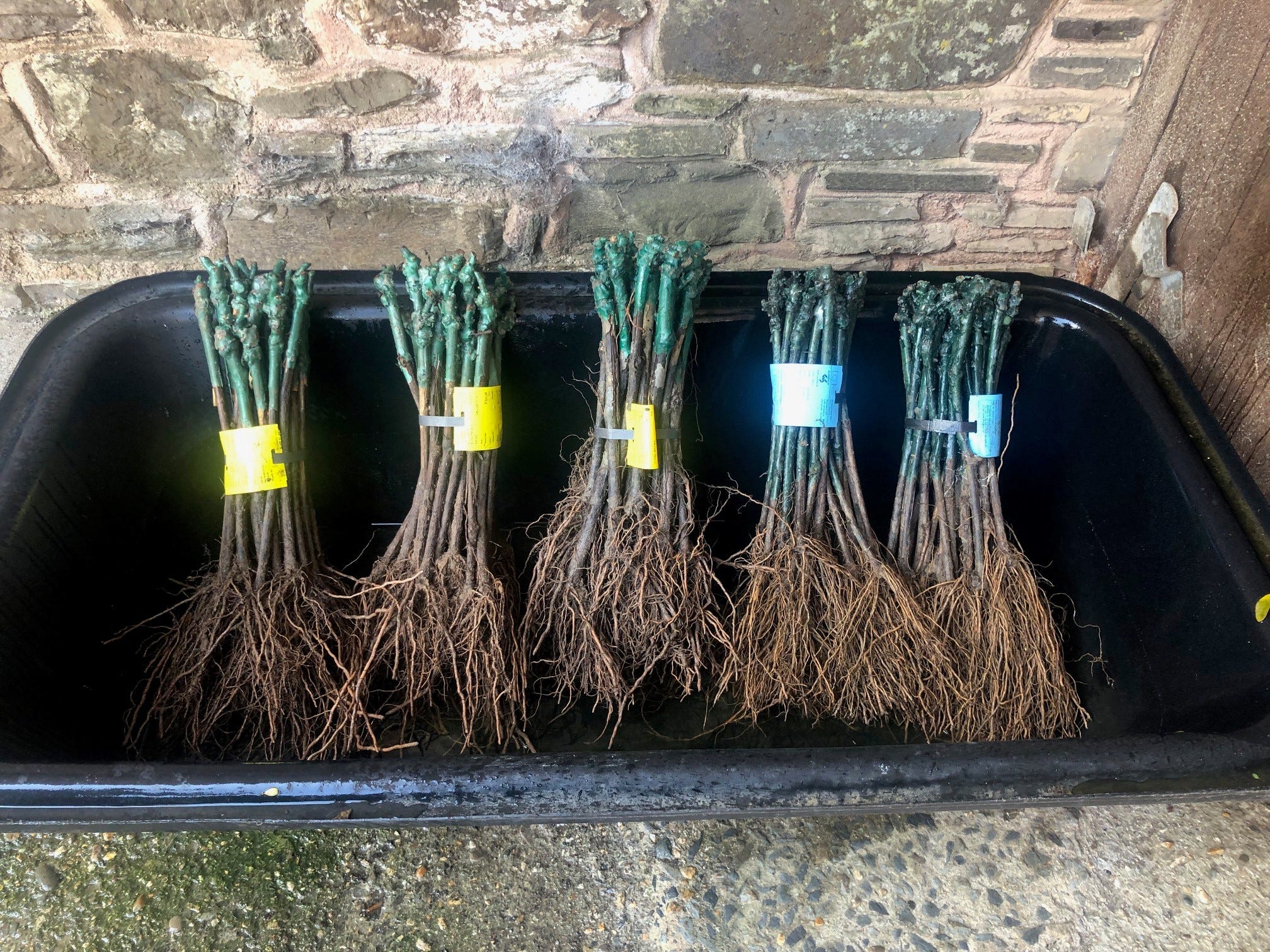
As for the grape varieties, this was where we really needed to investigate as any errors could lead to a wasted first year watching sticks grow into slightly larger sticks. We researched extensively, taking into account the specific characteristics of each grape, its suitability to the UK climate, and particularly the North Devon region. After much deliberation and asking of questions at local vineyards, we chose Seyval Blanc and Pinot Gris. We planted 75 Seyval Blanc vines, attracted by their versatility and the production of fresh, delicate wines, and 50 Pinot Gris vines, renowned for their charming scents and a touch of the European winemaking heritage. Another lesson learned during our research period was that the grape varieties are actually grafted onto roots which are proven to flourish in the UK. The vines are literally stuck onto the roots using a wax.
One hundred and twenty five vines is a very small start but also a test of whether vines would really grow on our land. We have other areas earmarked for expansion and a list of varieties we would like to try our hand at growing. So fingers crossed our exploratory party of vines grow as well as that singular example currently growing up through a crack in our yard, in shade, on flat land, abused by dogs, cats and birds as they run over it every day.